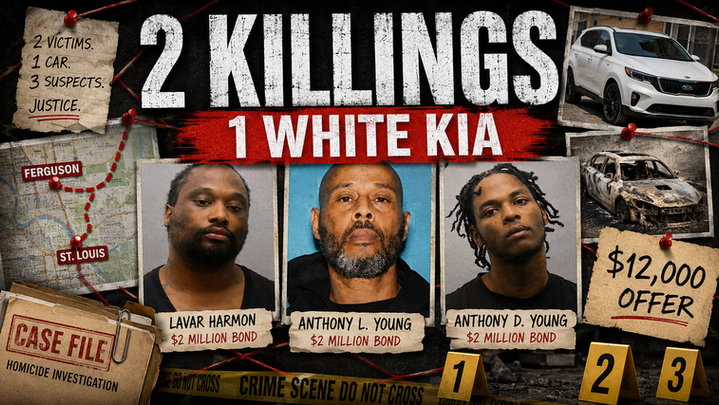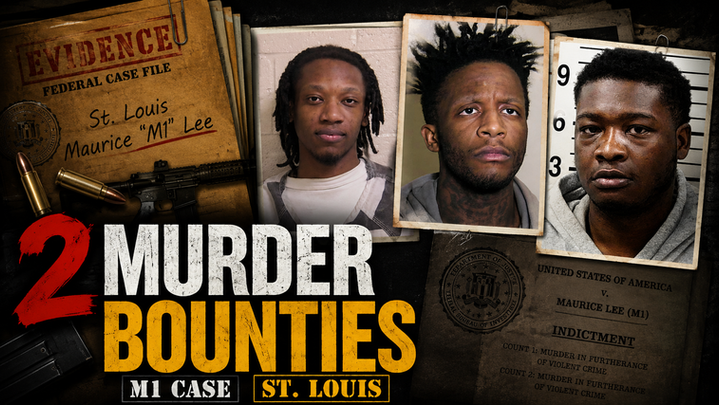
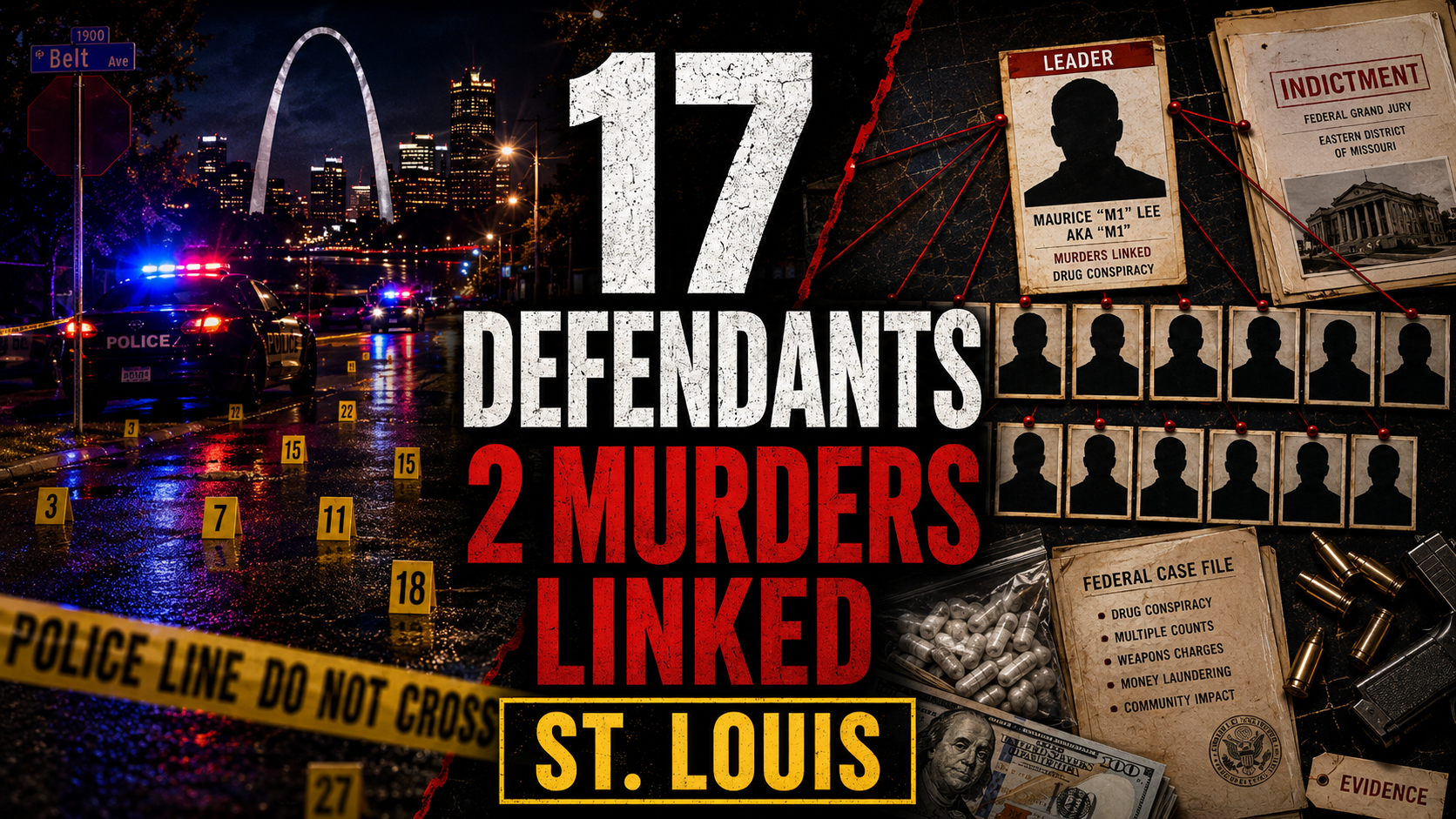
Reporting and analysis may discuss allegations and online theories. Allegations are not findings of guilt. Verify important details in the cited public record.
The Case File
The federal case against Maurice “M1” Lee’s organization did not begin as a murder prosecution. Investigators were following an interstate supply line that moved bulk fentanyl and crystal methamphetamine from Arizona into St. Louis. By the time the case was complete, the government had documented a distribution operation capable of selling more than 20,000 fentanyl doses during an average week, an armed network of street runners, standing cash bounties against rivals and two killings that Lee admitted financing.
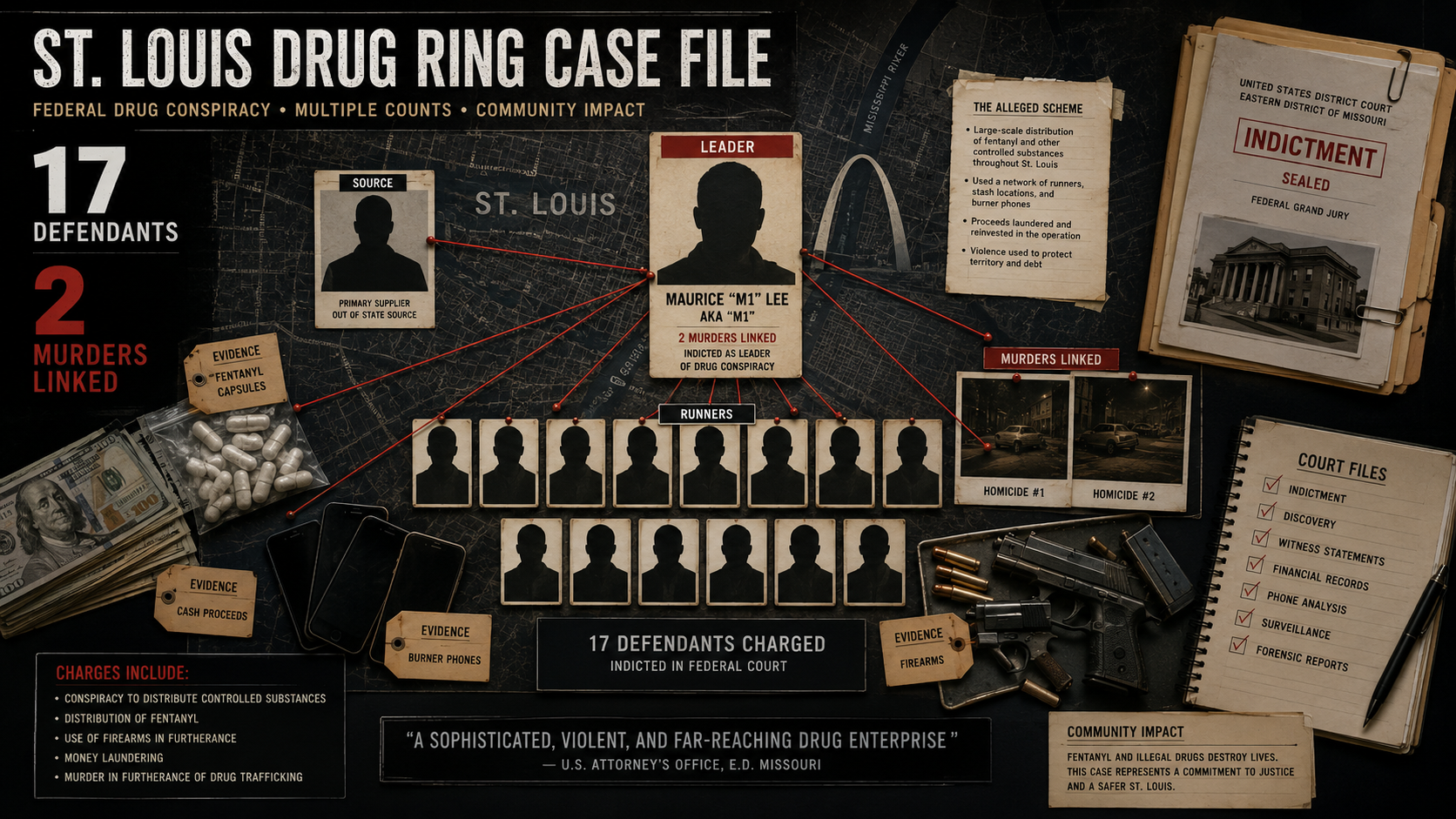
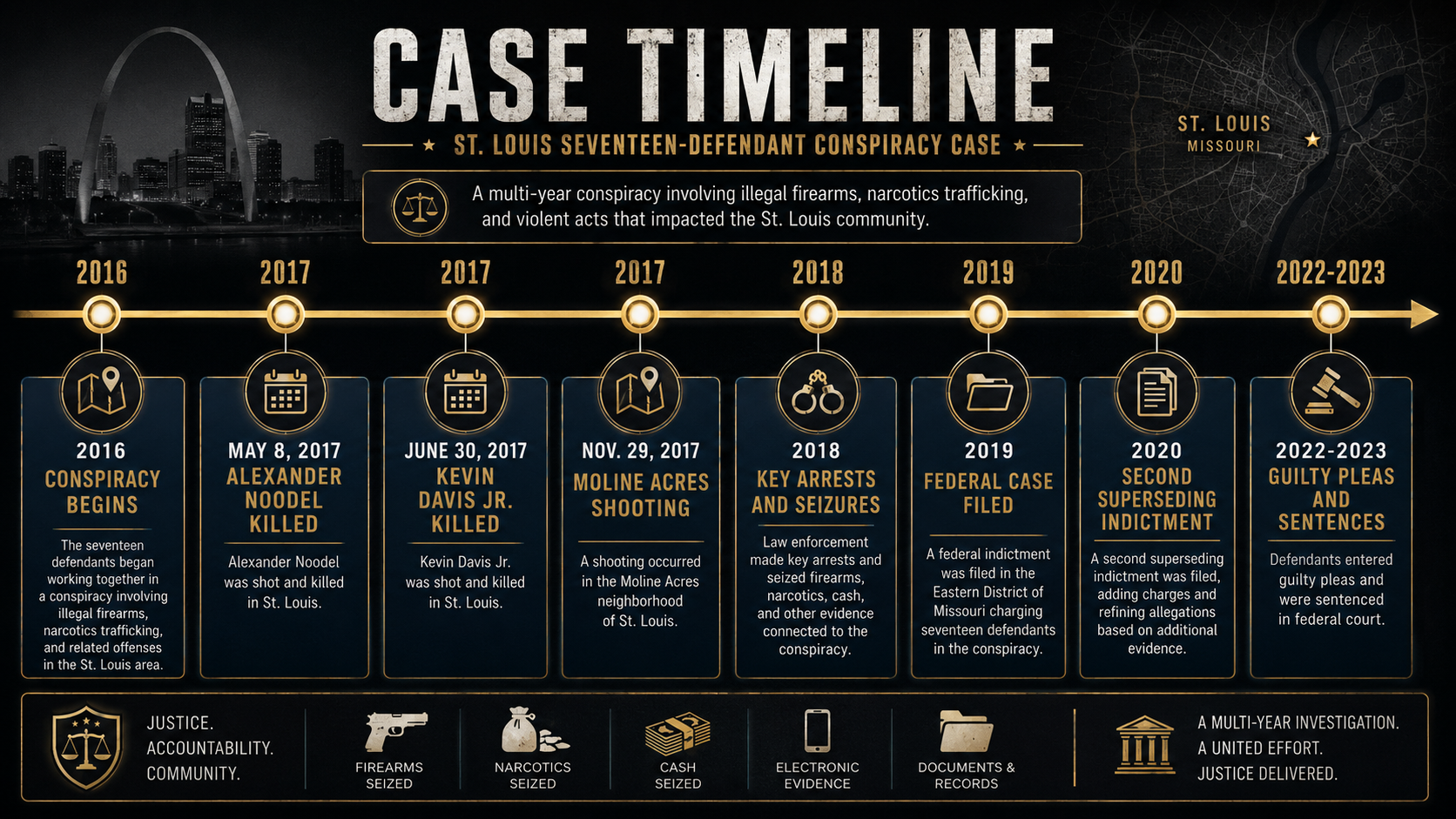
The second superseding indictment filed on October 14, 2020 contained 23 counts and named 17 defendants. The charges stretched across the organization’s supply, distribution and enforcement structure. Every defendant eventually pleaded guilty.
The two murders explained only part of the organization’s alleged violence. During litigation over the search of defendant Jerry Streeter’s home, a detective testified that the conspiracy was believed to have been responsible for approximately 15 to 20 shootings, some resulting in death. That number appeared in sworn court proceedings, but the public docket does not provide a verified list connecting the organization to every one of those incidents.
What the public record does identify is far more specific: more than 100 rounds fired during the murder of Alexander Noodel, a rifle later matched to casings from that scene, group messages used while the attackers searched for him, 25 shots fired during the killing of Kevin Davis Jr., a $10,000 payment chain and another attack in which assault rifles were used to seriously wound three people outside a Moline Acres market.
From Heroin to Fentanyl
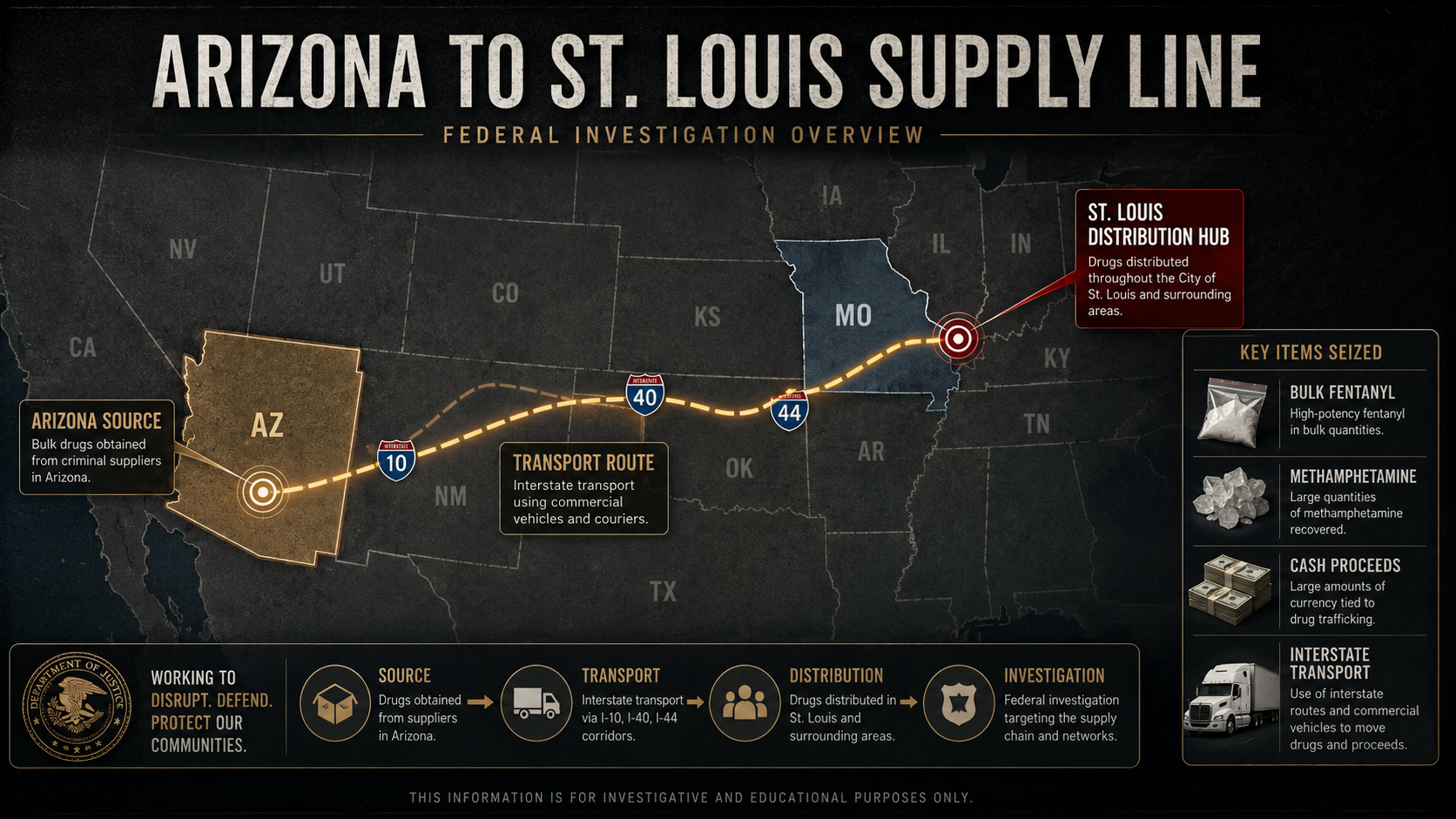
The conspiracy’s documented history began in 2016. Lee had primarily been distributing heroin in the St. Louis metropolitan area while the Drug Enforcement Administration and St. Louis County Police were investigating him and others connected to his narcotics activity.
The operation changed after Lee joined forces with Darryl Lennell Moore II, known as “Lil Darryl.” Moore had met Juan Jose Gonzalez in Arizona. Gonzalez, who was also identified as Francisco Alfonso Gonzalez and “Poncho,” became Moore’s source for bulk narcotics. Jermaine “Twin” Weaver assisted Moore with transportation through his work as an over-the-road truck driver and also helped finance narcotics purchases from Gonzalez.
Moore supplied Lee with bulk fentanyl and high-purity crystal methamphetamine referred to in the court documents as “Ice.” Lee distributed the methamphetamine in bulk to another customer for redistribution. The fentanyl required a separate production process before it reached the street.
How the Capsules Were Produced
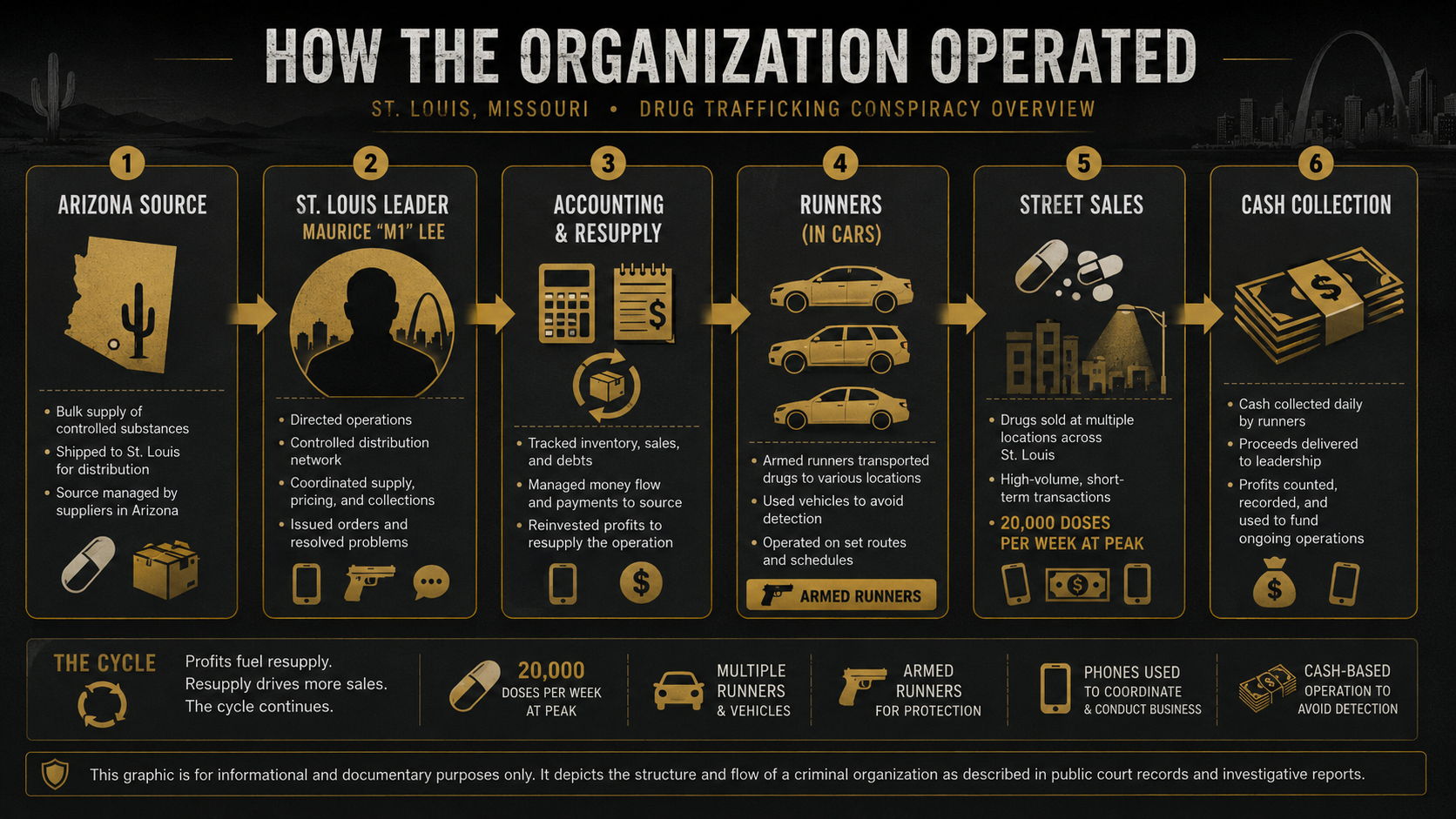
Lee’s organization stretched the raw fentanyl with a cutting agent, primarily Dormin. Tucker and Warlick were identified as members skilled in that process. Grinders and blenders mixed the fentanyl and Dormin into powder. The mixture was then scraped into empty capsules positioned in a pill press or tray, weighed on digital scales and packaged in plastic bags.
At the height of the conspiracy, at least nine runners distributed the capsules. The operation averaged more than 20,000 fentanyl doses every week. Lee later accepted responsibility for between four and 12 kilograms of fentanyl and between 500 grams and 1.5 kilograms of methamphetamine.
The scale alone did not explain the structure prosecutors uncovered. The runners usually worked in groups from one or two vehicles. According to the stipulated factual basis, all were armed with semiautomatic weapons, including handguns and assault-style rifles. Some operated as what the organization considered “muscle,” protecting the capsules, proceeds and sellers from robberies and rival groups.
The Seventeen-Defendant Structure
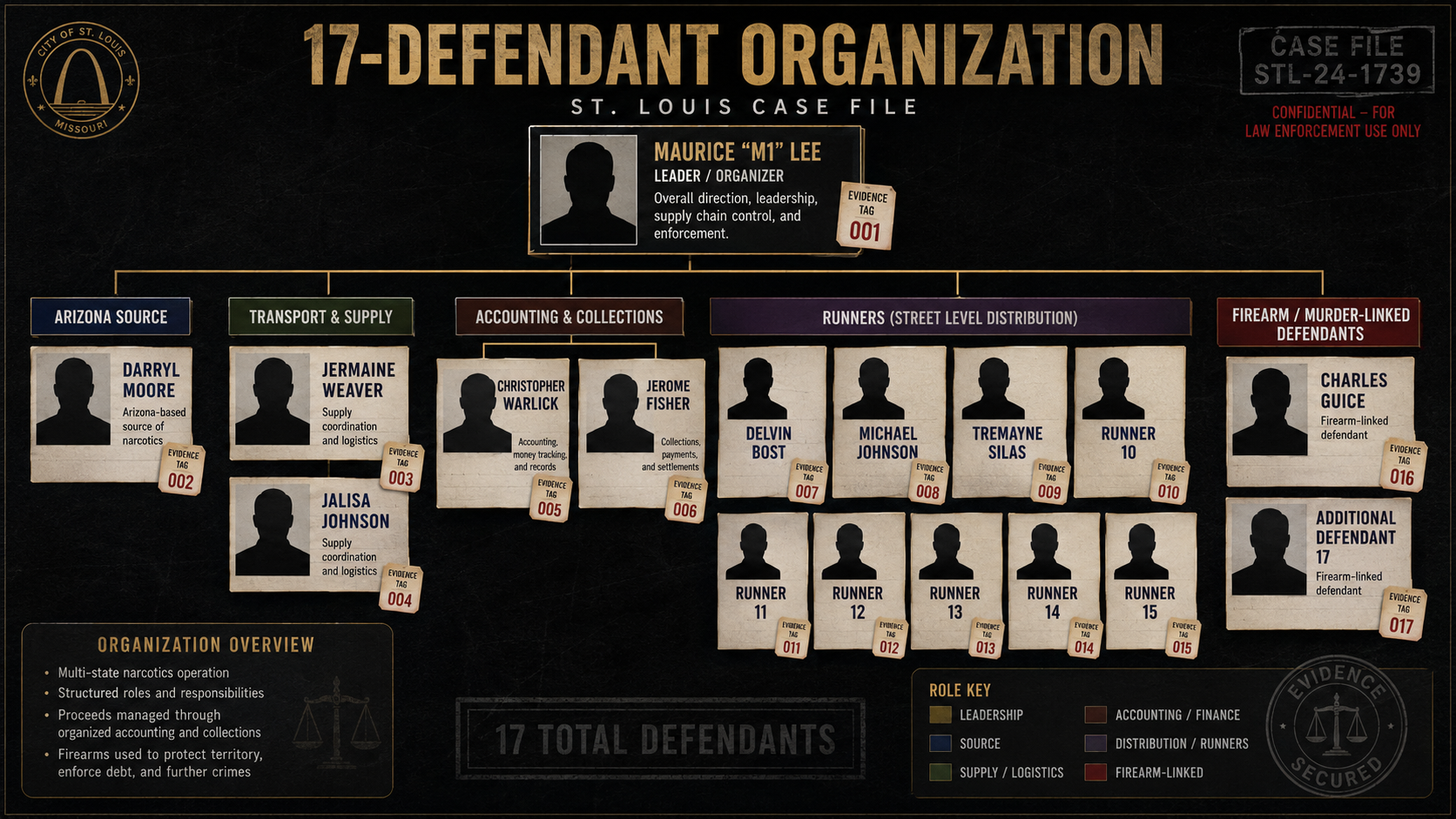
The indictment identified Gonzalez as the Arizona source and charged him in the first two counts. Moore was accused of linking Gonzalez’s supply to St. Louis, while Weaver helped finance and transport the narcotics. Lee appeared in eight counts—more than any other defendant on the indictment’s cover page.
Ramico Darez James Adams, known as “Chico,” occupied the position directly beneath Lee in the hierarchy described by investigators. Adams helped track how many capsules had been distributed and how much money was owed. Jalisa Shatavia Johnson supplied and resupplied runners during the day, then collected proceeds at the end of their shifts.
The runners and alleged enforcers were Christopher Jerrin Warlick Jr., known as “White Boy”; Norris Douglas Jr., known as “Slugga”; Mikell Rayford, known as “Kelz” or “Killa Kelz”; Sherod Jacolby Tucker, known as “Big Dog”; Jerry O. Streeter Jr., known as “Jay Trayz”; Jerome Lamont Fisher Jr., known as “LB”; Charles Dariel Guice, known as “Chuck”; Maricus Davon Futrell, known as “Rukus”; and Delvin Bost, known as “Deezy.”
Michael “Beezy” Johnson and Tremayne Silas became central to the firearm counts and murder evidence. Johnson was linked to the killing of Kevin Davis Jr. Silas admitted participating in the attack that killed Alexander Noodel.
The Standing Murder Contract
The organization referred to rival gang members and drug dealers as “Goofies.” Lee’s stipulated factual basis described a standing contract under which he offered between $5,000 and $15,000 for the murder of a rival. The bounty was not limited to one identified target. It was portrayed as a continuing offer known among members of the organization.
That arrangement converted personal disputes and competition into a payment system. Before both documented murders, someone contacted Lee to determine whether money was still available for the target’s death. After each killing, money moved from Lee through members of the organization.
The government did not have to prove the existence of that structure entirely through outside witnesses. Lee admitted offering and paying bounties connected to both deaths when he entered his guilty plea.
May 8, 2017: The Search for Alexander Noodel
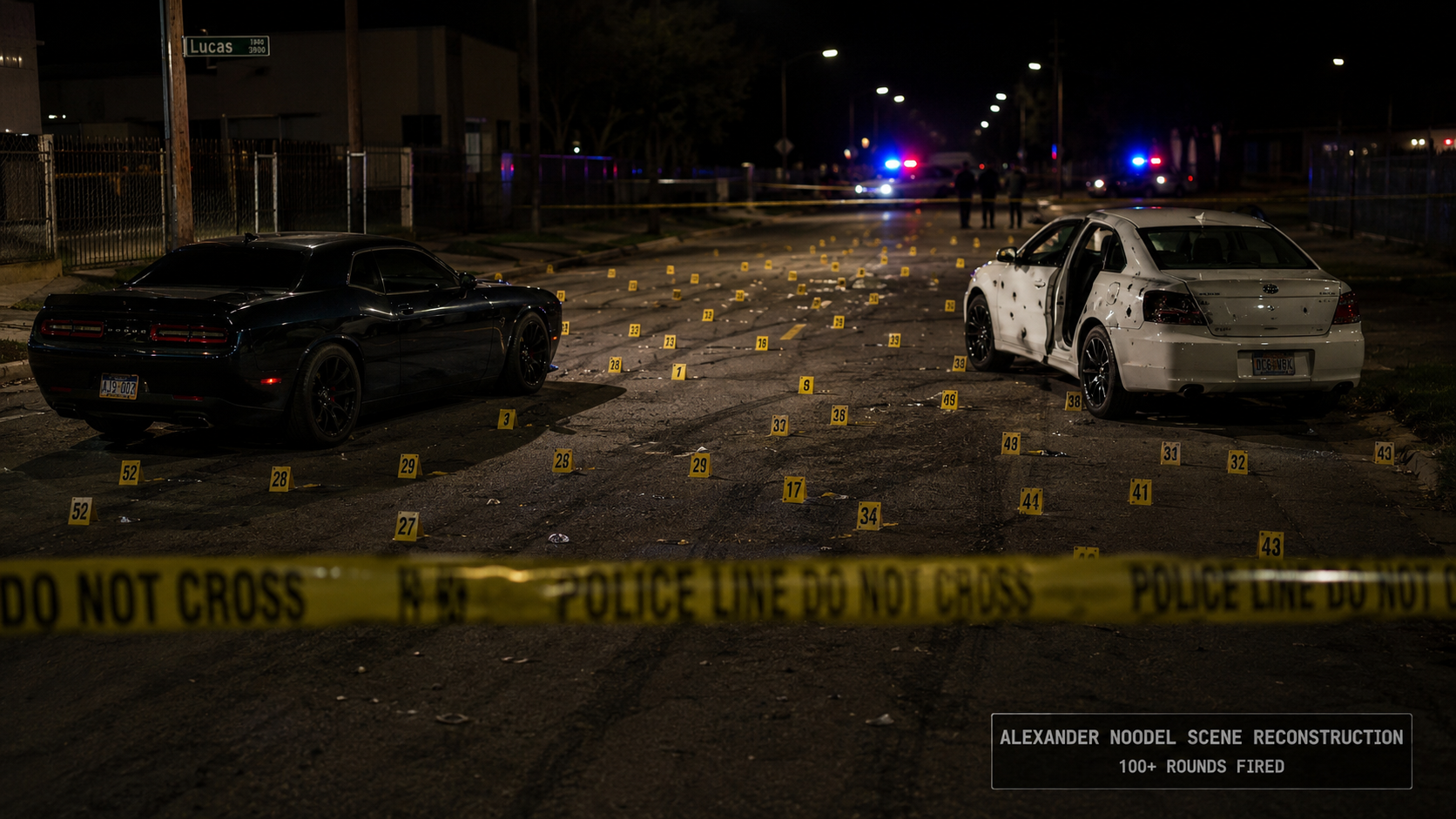
sLee considered Alexander Noodel a rival and accused him of stealing from him. On May 8, 2017, one or more co-conspirators contacted Lee to confirm that the bounty on Noodel remained active. The men learned that Noodel was drag racing somewhere in the city of St. Louis.
After Lee confirmed the payment was still available, Warlick, Fisher, Guice and Silas armed themselves and began searching for Noodel. They traveled in two vehicles and eventually located him driving with a passenger.
All four men exited the vehicles and opened fire, according to Silas’s stipulated factual basis. More than 100 rounds were discharged, scattering cartridge casings across the street. Noodel was struck in the head and collapsed inside the vehicle.
The passenger climbed over Noodel, returned fire and managed to escape. He drove to a firehouse seeking assistance. Noodel was transported to a hospital and pronounced dead from the gunshot wound to his head. Lee later paid the bounty.
There is a difference in how the public records describe the attackers’ roles. Silas’s plea agreement places Warlick, Fisher, Guice and Silas at the scene and says all four opened fire. Later Justice Department releases identify Silas and Fisher as the men who fatally shot Noodel and state that Lee paid Silas, Warlick and Fisher afterward. The public releases do not explain why Guice was omitted from the payment group.
The Group Messages
The Noodel murder left behind more than physical evidence. Investigators recovered records of group messages in which members coordinated while searching for him.
Fisher later acknowledged participating in those messages. His guilty plea included one count of conspiracy to distribute fentanyl and one count of possessing a firearm in furtherance of a drug-trafficking crime resulting in death. He admitted that firearms were discharged in furtherance of the narcotics conspiracy and acknowledged Noodel’s death.
The messages helped establish that the attack was not a chance encounter. The group was actively looking for Noodel after confirming the bounty. Their movement, the two vehicles and the eventual shooting were part of a coordinated search described in the plea record.
The Rifle Silas Kept
Fisher disposed of the firearm he used. Silas kept his rifle.
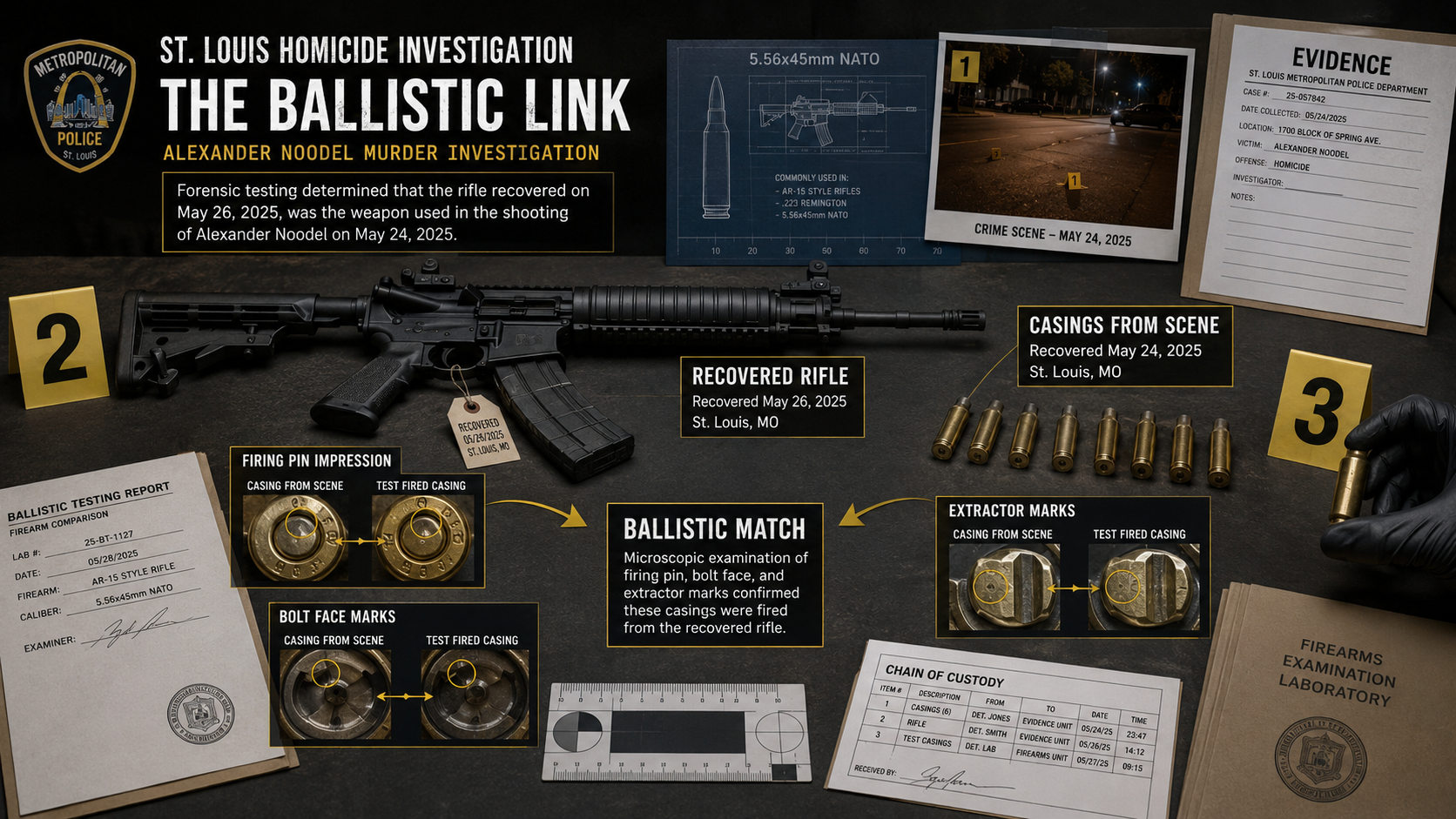
On January 24, 2018, St. Louis Metropolitan Police arrested Silas following a high-speed chase. The rifle was recovered during that arrest. Ballistic testing later matched it to several cartridge casings found at the Noodel murder scene.
That connection survived long after the shooting itself. The attackers had left more than 100 casings spread across the street. Silas then retained a weapon capable of linking him directly to those casings. He eventually admitted participating in the attack and pleaded guilty to possessing a firearm in furtherance of a drug-trafficking crime resulting in death.
On February 15, 2023, U.S. District Judge Ronnie L. White sentenced Silas to 18 years in federal prison.
June 30, 2017: The Bounty on Kevin Davis Jr.
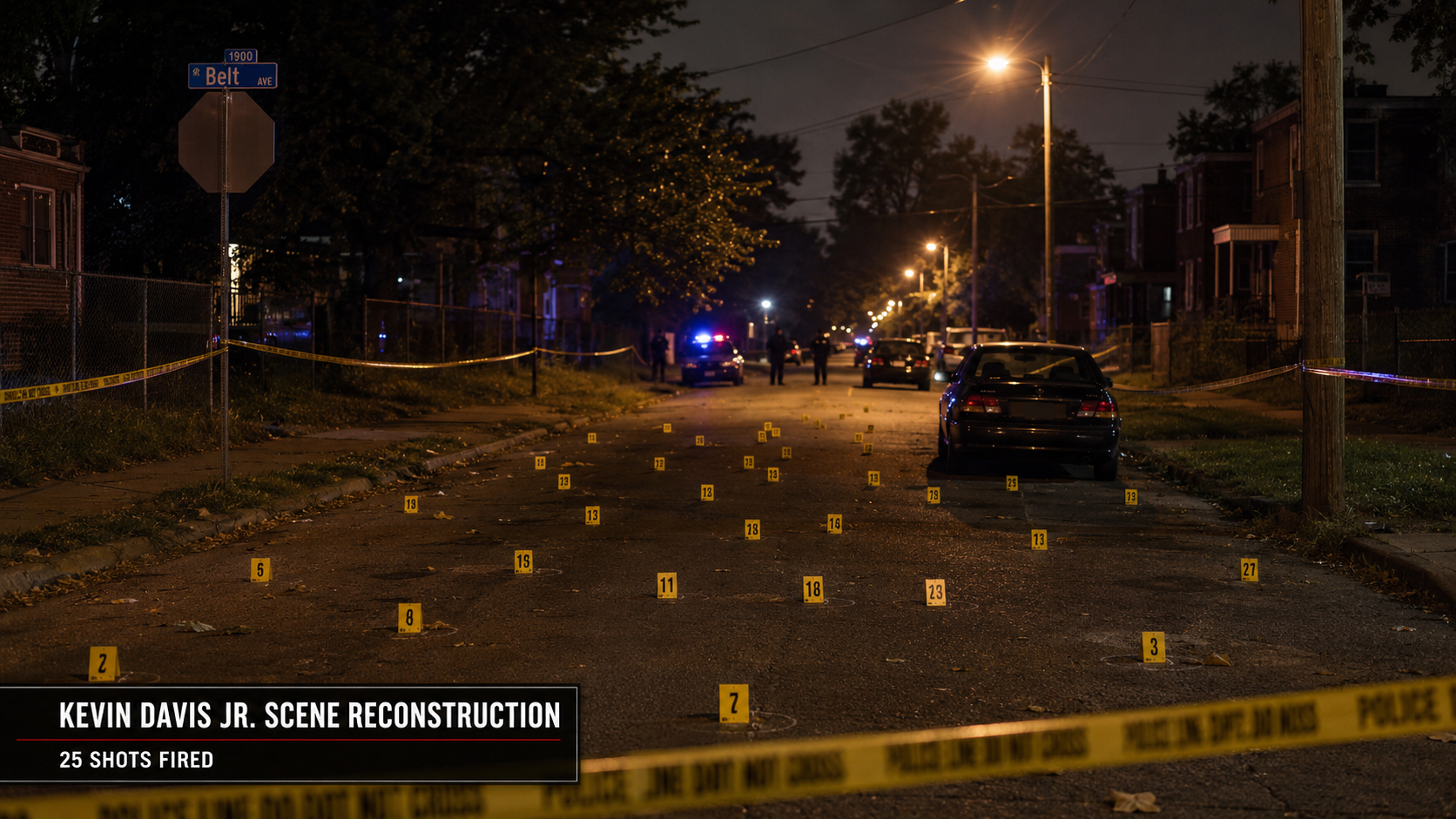
Less than two months after Noodel’s death, another bounty was confirmed.
Kevin Davis Jr. was 24 years old. Earlier on June 30, 2017, Delvin Bost contacted Lee to verify that money was still being offered for Davis’s killing.
Later that day, Davis was chased through the 1900 block of Belt Avenue. A witness identified Michael “Beezy” Johnson as the person who pursued him and fired 25 shots. Davis was killed.
Bost claimed credit for the killing and collected $10,000 from Lee. Bost then paid Johnson, according to plea agreements entered by Lee and Bost. The public court record therefore describes a three-step payment chain: Lee supplied the bounty, Bost accepted the money and Johnson received payment from Bost.
Johnson pleaded guilty to conspiracy to possess a firearm in furtherance of drug trafficking. He admitted discharging a firearm in furtherance of the conspiracy and acknowledged that Davis was killed. The Justice Department’s claim that Johnson fired all 25 shots was attributed to a witness identification.
Judge White sentenced Johnson to 18 years in prison on August 1, 2023.
Delvin Bost and the $10,000 Payment
Bost admitted calling Lee to confirm that the bounty remained active before Davis was killed. He also admitted accepting the $10,000 afterward and paying Johnson.
His involvement extended beyond the payment. Bost admitted selling drugs through Facebook and possessing methamphetamine when police confronted him on February 11, 2019. He pleaded guilty to conspiracy to possess a firearm in furtherance of drug trafficking and possession with intent to distribute methamphetamine.
Judge White sentenced Bost to nine years in prison and ordered him to pay more than $16,000 in restitution to Davis’s family.
Bost’s case also produced one of the most important suppression rulings in the entire prosecution. The court excluded physical evidence obtained during an August 8, 2018 seizure but allowed statements Bost made to police on February 11, 2019. Judge White adopted the magistrate judge’s recommendation in full on April 13, 2022.
The ruling meant that part of the government’s evidence against Bost could not be used, while his later statements remained available. His eventual guilty plea followed more than a year after that decision.
November 29, 2017: The Moline Acres Shooting
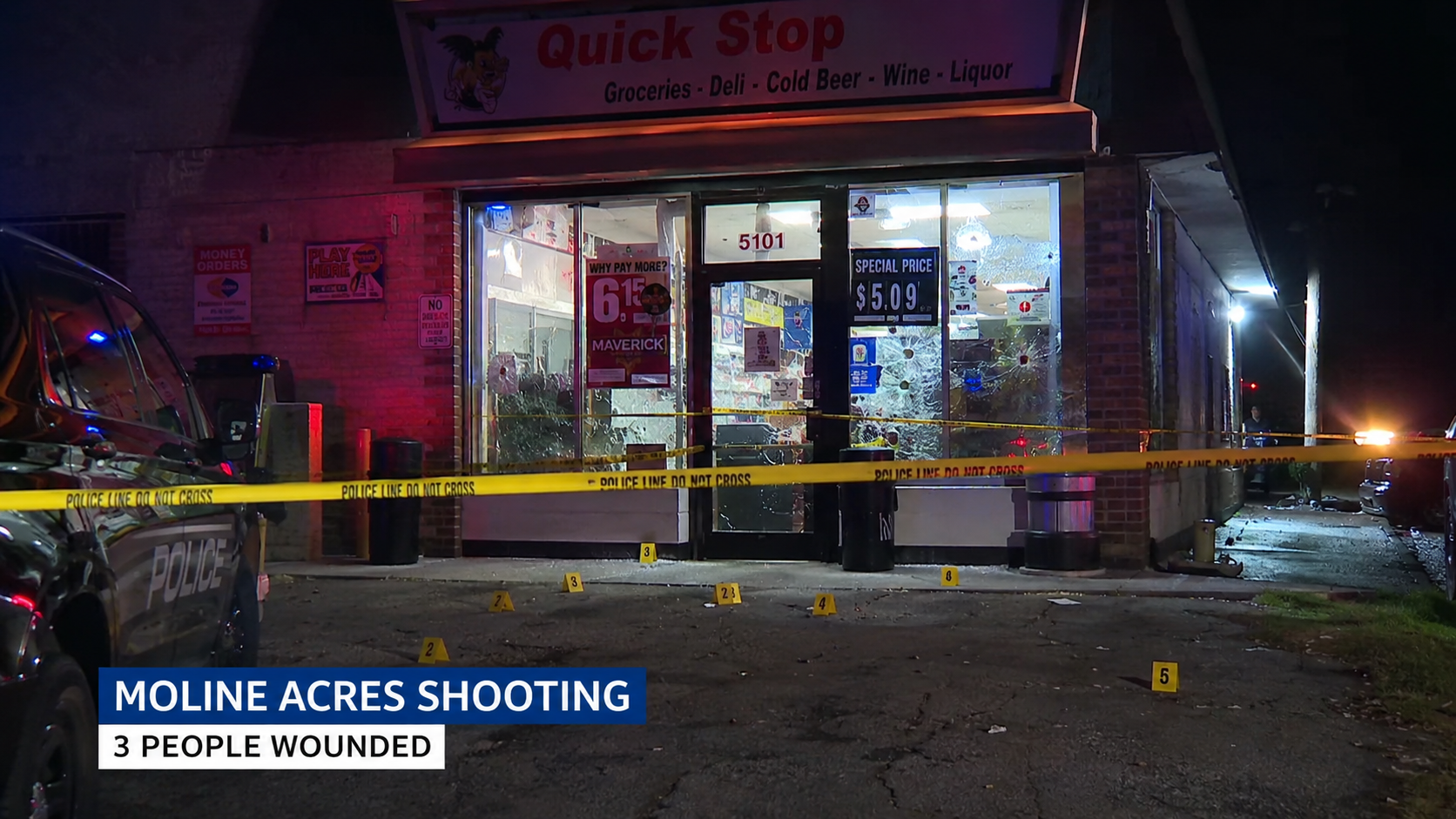
The organization’s violence did not stop with the two murders.
On November 29, 2017, Warlick carried a Glock pistol while driving Streeter and Rayford to a market in Moline Acres. Streeter and Rayford exited the vehicle with assault rifles and opened fire, seriously wounding three people.
Warlick later admitted acting as armed security for the fentanyl dealers and being primarily responsible for diluting the organization’s fentanyl. He pleaded guilty to conspiracy to distribute fentanyl and to possessing and brandishing a firearm in furtherance of drug trafficking.
The Moline Acres shooting established another documented link between the distribution crews and coordinated firearm violence. The same network that produced, transported and sold the capsules could also place armed members into vehicles and send them toward a targeted location.
March 2018: The Rayford Arrest
Mikell Rayford was arrested in March 2018. Investigators recovered a semiautomatic handgun with an extended magazine, approximately $1,600, an AK-style pistol fitted with a drum magazine and equipment consistent with fentanyl production.
The seized equipment included coffee grinders containing powder residue, a pill press, plastic bags, empty capsules, digital scales, rubber gloves, surgical masks and hair nets. Those items matched the production method later described in the stipulated factual basis: fentanyl and Dormin mixed in grinders or blenders before being packed into capsules.
The arrest connected firearms, cash and processing equipment in one seizure. It provided investigators with physical evidence of the manufacturing stage and not merely finished capsules recovered during a street-level arrest.
April 2018: The Arizona Connection Becomes Evidence
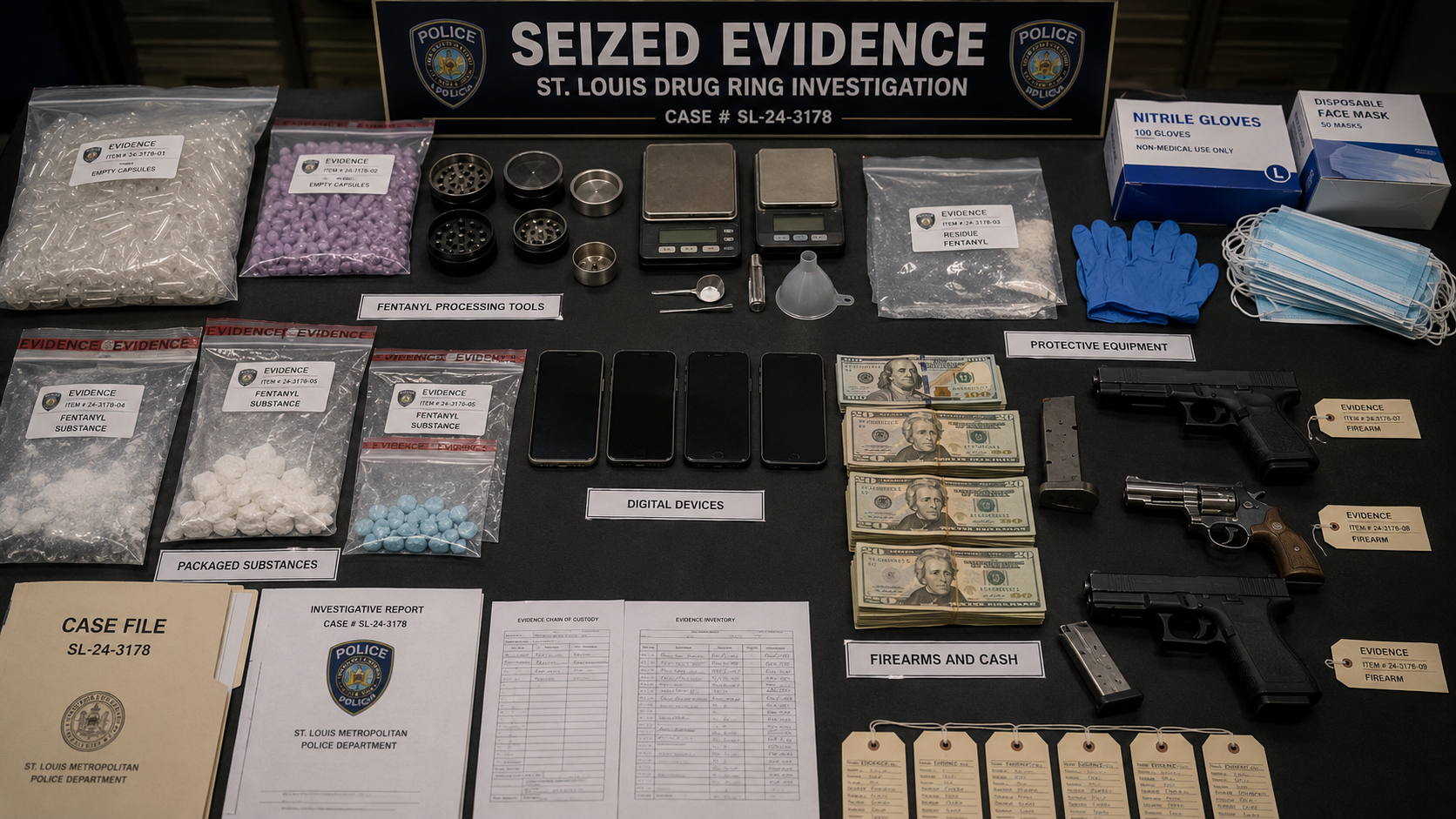
DEA agents arrested Darryl Moore in April 2018 and searched two residences and his vehicle with his consent. Agents recovered more than 3.5 pounds of crystal methamphetamine described as nearly 100 percent pure, more than $7,000 and eight firearms, including an assault rifle.
During a post-arrest interview, Moore confirmed that Gonzalez was his source. He also admitted supplying Lee with bulk fentanyl and methamphetamine.
That statement gave investigators a direct account of the supply chain. Gonzalez supplied Moore from Arizona. Moore transferred the narcotics to Lee. Lee controlled the St. Louis distribution network, while Adams managed accounting and the runners moved capsules to customers.
June 2018: The Stolen Charger
Police located Lee inside a stolen Dodge Charger in June 2018. Douglas and Warlick were also in the vehicle.
A high-speed pursuit followed. Lee escaped by jumping from the car, but Douglas and Warlick were arrested. Investigators already knew through earlier surveillance that the Charger was being used to distribute fentanyl on Lee’s behalf.
Police recovered fentanyl capsules and multiple firearms from the vehicle and from a satchel Douglas was carrying. Both Douglas and Warlick admitted distributing fentanyl for Lee’s organization.
The Charger linked the organization’s street distribution to a mobile sales operation. The capsules, weapons, surveillance and admissions placed two runners inside a vehicle already associated with Lee’s operation, while Lee’s escape demonstrated that investigators had not yet reached the top of the structure.
March 2019: The Federal Case Opens
The federal prosecution was filed in March 2019. The conspiracy period described in the plea record ran from January 2016 through the date of the original indictment.
By that point, investigators had accumulated narcotics seizures, production equipment, firearms, post-arrest statements, vehicle surveillance, digital communications and ballistic evidence from a murder scene.
The case later expanded into a second superseding indictment filed on October 14, 2020. That version named all 17 defendants and assigned charges across 23 counts.
The Indictment’s Count Structure
Gonzalez was named in Counts One and Two. Moore appeared in Counts One, Two, Fourteen and Fifteen. Weaver faced Counts One and Two. Lee was charged in Counts One through Eight.
Adams and Jalisa Johnson appeared in Count One. Warlick was named in Counts One, Three and Five. Douglas faced Counts One, Sixteen and Seventeen. Rayford appeared in Counts One, Five, Nine, Ten and Eleven. Tucker was charged in Counts One, Twelve and Thirteen.
Streeter faced Counts One, Five, Eighteen and Nineteen. Fisher and Guice were each named in Counts One and Three. Futrell appeared in Count One. Bost faced Counts One, Four and Twenty through Twenty-Three. Michael Johnson appeared in Counts One and Four, while Silas was charged in Count Three.
The count assignments reflected different positions and incidents. Not every defendant was accused of participating in both murders, and not every member occupied the same role in the narcotics conspiracy. The prosecution was built around a shared organization rather than identical conduct.
The Alleged Fifteen-to-Twenty Shooting Footprint
During a June 23, 2021 evidentiary hearing connected to Streeter’s attempt to suppress evidence, Detective Kevin Walsh testified about the danger officers believed they faced while arresting members of the conspiracy.
The court summarized his testimony by stating that the organization engaged in violence and was responsible for approximately 15 to 20 shootings, some resulting in death. Officers were conducting a larger roundup of co-defendants who associated with one another and frequented each other’s homes.
That testimony helped justify a protective sweep of Streeter’s residence after officers heard a commotion inside. Police found marijuana, firearms and ammunition. Judge White upheld the search, concluding that officers had specific facts supporting their belief that other people could be hiding inside and could ambush them.
The 15-to-20 figure must be treated carefully. It was investigative testimony presented during a suppression dispute, not a final judicial finding that every shooting had been solved or committed by a specific defendant. The public releases provide detailed narratives for two murders and the Moline Acres triple shooting, but they do not identify the remaining incidents.
The Witness-Safety Fight
The government’s evidence included confidential informants and cooperating defendants. Defense attorneys sought earlier disclosure of those witnesses and potentially favorable material.
Judge White ruled that the government did not have to identify an informant or cooperating co-defendant until 14 days before trial. The court cited the allegations of violence and threats while attempting to balance witness safety against the defendants’ ability to prepare.
The judge also required Brady and Giglio material to be produced 14 days before trial. If a cooperator refused a defense interview, the government was not required to compel one, although prosecutors had to ask whether the witness would voluntarily speak with defense counsel.
Those restrictions reveal how the court viewed the risk surrounding the prosecution before the guilty pleas eliminated the need for a joint trial.
The Guilty Pleas
The case began to close defendant by defendant.
Silas pleaded guilty in November 2022. His agreement contained the detailed narrative of the Noodel murder, including the search for the victim, the two vehicles, the volume of gunfire, the passenger’s escape and the rifle recovered during Silas’s later arrest.
Lee pleaded guilty on May 2, 2023 to fentanyl conspiracy, methamphetamine conspiracy and two firearm-conspiracy counts. He admitted being responsible for the drug quantities, maintaining the bounty system and paying for both murders.
Michael Johnson entered his plea on May 4. Fisher and Warlick pleaded guilty on May 8. Bost followed on May 9, and Guice entered his plea on May 10. With Guice’s plea, all 17 defendants had admitted guilt.
Sentences Confirmed in the Public Record
Judge White sentenced Lee to 20 years in federal prison on September 7, 2023. Lee’s conviction covered the narcotics conspiracies, the armed protection of the organization and the two paid killings he admitted financing.
Silas received 18 years for the firearm offense resulting in Noodel’s death. Michael Johnson received 18 years for the firearm conspiracy tied to the killing of Davis. Bost received nine years and more than $16,000 in restitution.
Earlier sentencing information released by the Justice Department identified Moore’s term as 98 months, Weaver’s as 10 years, Tucker’s as 80 months and Futrell’s as 11 months.
The September 2023 Lee sentencing release stated that both sides were recommending 17 years for Fisher, but the release was issued before Fisher’s scheduled sentencing. That recommendation should not be presented as his final sentence without the later judgment.
The Evidence That Held the Organization Together
The case was not built on a single cooperating witness or one controlled purchase. Different categories of evidence reinforced one another.
The Arizona supply line was supported by Moore’s post-arrest statement, the narcotics recovered during the searches and the financial and transportation roles attributed to Gonzalez and Weaver. The fentanyl-production process was supported by grinders, pill equipment, empty capsules, protective gear and powder residue recovered during Rayford’s arrest.
The street operation was supported by surveillance of the stolen Charger, the fentanyl and firearms recovered from it and admissions made by Douglas and Warlick. Adams and Jalisa Johnson’s roles explained how capsules and money moved between leadership and runners.
The Noodel murder was supported by group messages, the bounty confirmation, more than 100 fired rounds, Silas’s retained rifle, the ballistic match and the later guilty pleas.
The Davis murder produced a different evidentiary chain: a witness identified Johnson, Bost admitted confirming the bounty and accepting the payment, Lee admitted paying it, and Bost admitted passing money to Johnson.
Official Facts Versus What Remains Unproven
The guilty pleas establish that Lee controlled a fentanyl and methamphetamine conspiracy supplied through Arizona, that his organization averaged more than 20,000 fentanyl doses per week at its height and that armed runners protected the operation.
Lee admitted offering and paying bounties connected to the murders of Noodel and Davis. Silas admitted participating in the Noodel shooting. Bost admitted confirming and collecting the Davis bounty. Johnson admitted discharging a firearm in furtherance of the drug conspiracy, while a witness identified him as the person who fired 25 shots at Davis.
The public record reviewed for this file does not identify the precise block where Noodel was attacked. It says he was drag racing in St. Louis and that the attackers located him after confirming the bounty. Any more specific scene location requires an underlying homicide report or additional verified court filing.
The documents also do not name every shooting included in the detective’s estimate of 15 to 20 incidents. That testimony cannot be converted into additional confirmed murders, additional victims or a body-count list without separate reports proving each connection.
No reliable public document reviewed here establishes an official gang name for the entire organization beyond its description as Lee’s drug-trafficking organization. Individual rivalries and affiliations should not be expanded beyond the language contained in the pleas and sentencing records.
Silas’s Post-Conviction Challenge
Silas appealed after receiving his 18-year sentence. The Eighth Circuit entered judgment in September 2023 and issued its mandate that November. He later pursued post-conviction relief and argued that his guilty plea lacked an adequate factual basis connecting the firearm offense and Noodel’s death to the fentanyl conspiracy. Those arguments appeared in later filings and did not erase the existing conviction.
In 2026, Silas submitted a petition for a writ of mandamus to the Supreme Court. The Court denied the petition on May 18, 2026 in an unexplained order. A mandamus denial is not a written reconsideration of all evidence in the original case; the order simply left the existing proceedings undisturbed.
Final Breakdown
The murders were not separate additions placed onto an otherwise ordinary narcotics case. The payment system, armed runners and targeted violence were woven into the organization’s method of protecting its drug market.
Noodel’s death began with a call confirming that Lee’s money was still available. Four armed men searched for him in two vehicles. The attack left more than 100 rounds across the street, a surviving passenger who returned fire and a rifle that remained in Silas’s possession until police recovered it eight months later.
Davis’s death followed another confirmation call. He was chased through Belt Avenue and shot 25 times. Bost claimed the bounty, collected $10,000 from Lee and paid Johnson.
Around those killings sat the larger narcotics structure: Arizona suppliers, bulk fentanyl, nearly pure methamphetamine, grinders, capsule equipment, accountants, money collectors, armed vehicles and runners capable of moving more than 20,000 doses during a single week.
Investigators did not have to connect every defendant to every shooting. They had to prove how the organization functioned and how separate actions advanced it. By May 10, 2023, every person named in the 23-count indictment had pleaded guilty.
The final record documented 17 defendants, two paid murders, one additional triple shooting, multiple weapons recoveries, a ballistic match, digital planning evidence and an interstate supply chain. The detective’s reference to as many as 20 shootings suggests a wider history, but the two deaths attached to Lee’s admitted bounty system remain the part of that history the federal record explains in full.