
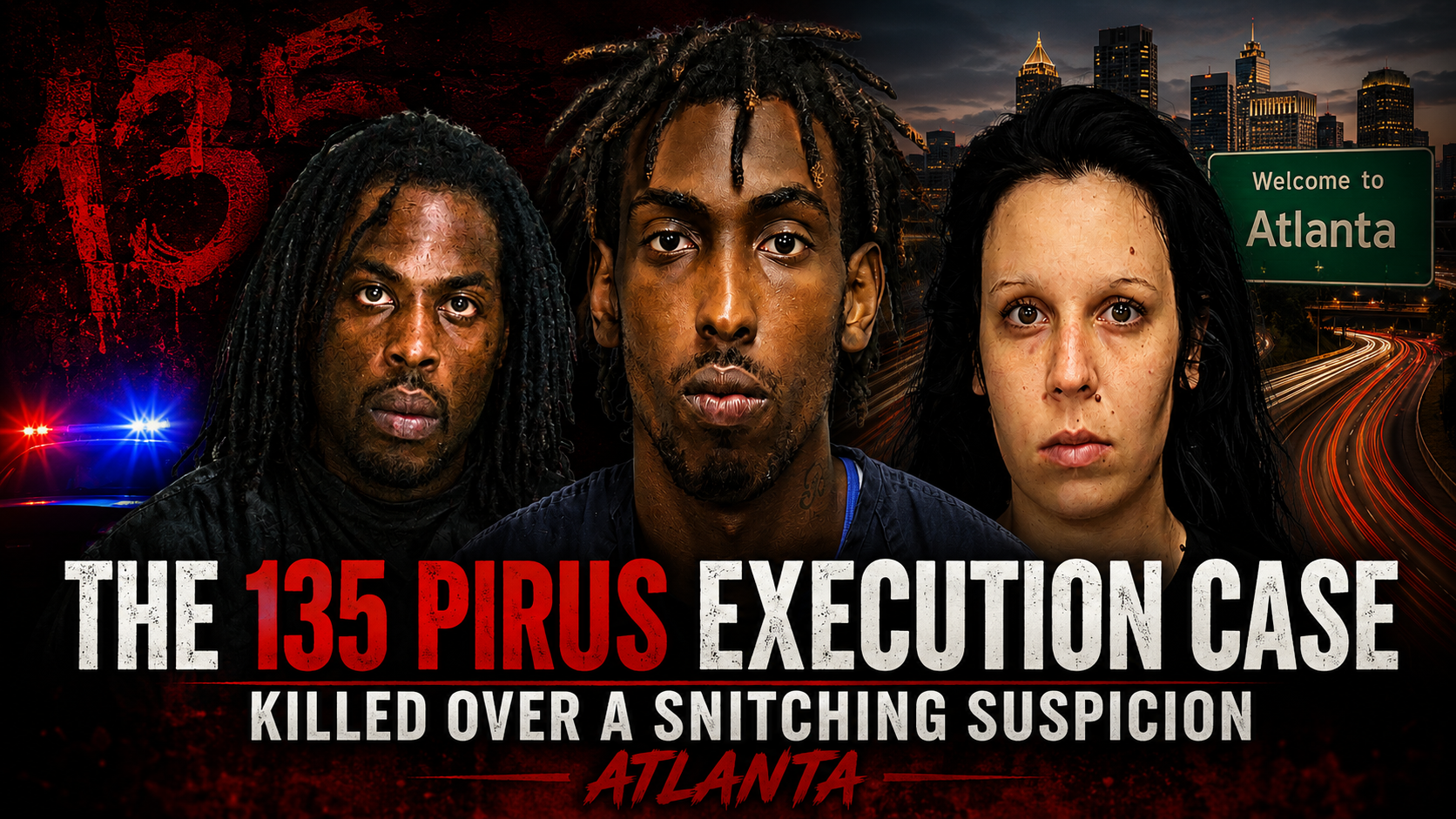
Reporting and analysis may discuss allegations and online theories. Allegations are not findings of guilt. Verify important details in the cited public record.
The Case File
The 135 Pirus execution case became one of the darkest Georgia federal gang files because prosecutors said the murder started with one suspicion: a 17-year-old gang member may have talked to police. That suspicion, according to federal authorities, was enough for members of the 135 Pirus to lure him to Bartow County, shoot him with the same gun connected to a nightclub attack, and leave his body on a rural road.
This was not a normal RICO case built only around drugs or street fights. The federal file connected a Brookhaven nightclub shooting, a suspected witness execution, a gas station shooting, a prior Cartersville drive-by, firearms recovered from a lake, gang discipline rules, and multiple prison sentences that eventually sent several defendants away for decades. The lead defendant, Maurice Antonio Kent, also known as “Savage Duze,” was described by prosecutors as a northwest Georgia 135 Pirus leader with authority over members around Cartersville and Rome. He was convicted at trial and sentenced to 40 years in federal prison.
The Gang Structure
Federal prosecutors said the 135 Pirus originated in Compton, California, and expanded into the Northern District of Georgia. The Georgia organization was described as divided into a Southside or Atlanta group, a Northside or North group, and a Northwest Georgia group, while still maintaining ties to California-based leadership. That structure gave the case a different feel from a regular neighborhood indictment because prosecutors were describing a gang with regions, leaders, rules, oaths, discipline, and expectations for members to “put in work.”
According to the indictment announcement, a recruit or “550” had to be sponsored by an existing member before being “jumped in,” which prosecutors described as being physically beaten for 35 seconds. The gang allegedly called this being “put on the hood.” Prosecutors also said 135 Pirus rules called for death if a member cooperated with law enforcement, which becomes the center of the entire case once the 17-year-old victim was suspected of talking to police after the Brookhaven nightclub shooting.
The Brookhaven Nightclub Shooting
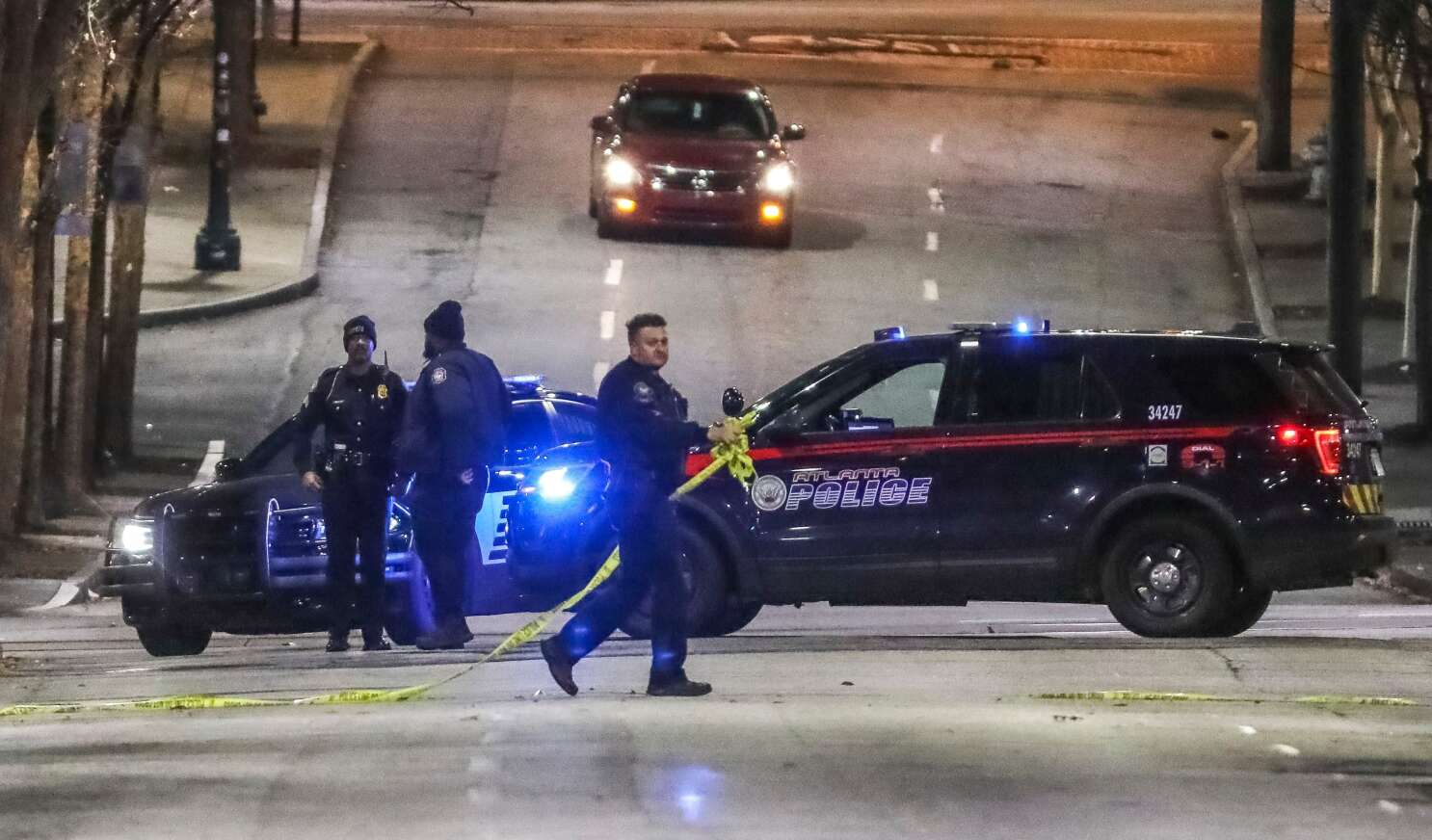
The case started escalating in the early morning hours of May 13, 2017, outside a Brookhaven nightclub. Prosecutors said an argument happened between a California-based 135 Pirus gang member and a rival gang member after the California member was supposedly disrespected. Maurice Kent then allegedly fired multiple rounds into a crowd outside the club, critically wounding the rival gang member and a club security guard.
During his flight from the scene, Kent tossed the firearm from a vehicle shortly before Brookhaven police arrested him. That detail became critical later because the same gun did not disappear from the case. Prosecutors later said the 17-year-old victim, a fellow 135 Pirus member, may have witnessed the nightclub shooting and was interviewed by law enforcement afterward. Once Kent learned about that while in custody, prosecutors said he believed the teenager was “snitching.”
The Snitching Suspicion
The murder motive prosecutors described was simple and brutal. The 17-year-old was not accused in the DOJ release of killing anyone or betraying a rival. He was suspected by fellow gang members of speaking to law enforcement about the nightclub shooting. Inside the gang’s alleged rules, cooperation with police was treated as a death-level offense.
That suspicion turned the federal case into something more disturbing than a normal retaliation file. Prosecutors said the teenager was part of the same gang culture that eventually marked him as a threat. He was young, allegedly close enough to the organization to witness violence, and then became disposable once members believed he had talked. The case reads less like an outside enemy attack and more like an internal execution meant to protect the enterprise from law enforcement.
The Bartow County Execution
Two days after the nightclub shooting, 135 Pirus members allegedly devised a plan to lure the 17-year-old to Bartow County, Georgia. Prosecutors said the teenager was shot and killed with Kent’s gun, and his body was left on a rural road. The indictment announcement says the murder happened on June 3, 2017, while the later sentencing release describes the plan unfolding two days after Kent learned the teen had been interviewed by law enforcement.
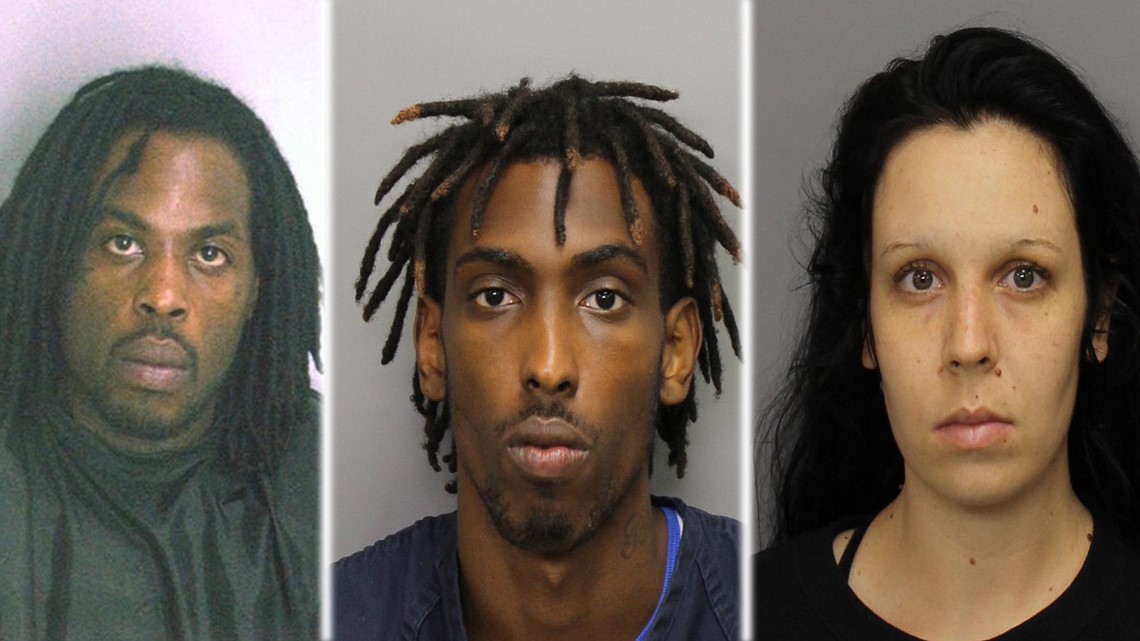
Christopher Nwanjoku, also known as “Problem,” Jamel Dupree Hughes, also known as “Savage,” Jennifer Foutz, also known as “Rose,” and Cedric Sams Jr., also known as “Awall,” were named in connection with the plan to lure and murder the teenager. Federal prosecutors charged the killing as murder in aid of racketeering, meaning the government treated the murder as an act connected to the gang enterprise rather than a separate personal dispute.
The Gun That Tied The Violence Together
The gun evidence made the case even stronger. Prosecutors said the teenager was killed with Kent’s gun, connecting the murder directly back to the Brookhaven nightclub shooting. That meant the same firearm Kent allegedly used during a public shooting outside the club became part of the murder of the teenager suspected of talking about that same incident.
Federal prosecutors also introduced evidence that eight months before the nightclub shooting, in September 2016, Kent committed a drive-by shooting of a man standing in his front yard in Cartersville. After that shooting, Kent threw the firearm into Lake Allatoona. The FBI later recovered the gun from the bottom of the lake and matched cartridge casings and a bullet from the drive-by shooting to Kent’s firearm. That detail gives the file a full forensic layer: a drive-by, a discarded gun, a lake recovery, and ballistic matching by federal investigators.
The Gas Station Shooting
The violence did not stop with the teen’s murder. On June 7, 2017, prosecutors said Jamel Hughes and Jennifer Foutz encountered a member of another gang at a gas station in Acworth, Georgia. After words were exchanged, Hughes allegedly got out of the passenger side of Foutz’s vehicle and shot the other gang member multiple times. Undercover police officers were already at the gas station on an unrelated case and witnessed the shooting. During a short pursuit, Hughes allegedly threw the gun out of the window before police recovered it and arrested Hughes and Foutz.
That gas station shooting gave prosecutors another violent act tied to the 135 Pirus enterprise and helped show the pattern the government was alleging: disrespect, gunfire, retaliation, witness fear, and violence used to protect gang standing. It also gave the case another “wrong place, right time for investigators” detail because undercover officers happened to be at the gas station when the shooting unfolded.
Maurice “Savage Duze” Kent
Maurice Antonio Kent was the lead defendant and one of the most important figures in the case. Prosecutors described him as a 135 Pirus leader in northwest Georgia with authority over members in the Cartersville and Rome area. He was charged in relation to the Brookhaven nightclub shooting and later convicted of RICO conspiracy, violent crime in aid of racketeering, discharging a firearm during those violent crimes, and possession of a firearm as a convicted felon.
On May 18, 2022, a federal jury found Kent guilty. On August 24, 2022, he was sentenced to 40 years in prison followed by three years of supervised release. For the case file, Kent becomes the center of the timeline because prosecutors connected him to the earlier Cartersville drive-by, the Brookhaven nightclub shooting, and the suspicion that led to the teenager’s execution.
The Other Sentences
The sentencing phase shows how serious the federal government considered the case. Christopher Nwanjoku, also known as “Problem,” a 135 Pirus leader from Lawrenceville, received 25 years in prison after pleading guilty to RICO conspiracy. Jamel Hughes, also known as “Savage,” received 26 years and two months after pleading guilty to murder in aid of racketeering, use of a firearm in furtherance of a crime of violence resulting in death, attempted murder in aid of racketeering, and discharge of a firearm in furtherance of a crime of violence.
Cedric Sams Jr., also known as “Awall,” received 20 years after pleading guilty to murder in aid of racketeering and use of a firearm in furtherance of a crime of violence resulting in death. Michael Kent, also known as “Wikked,” Maurice Kent’s twin brother and a 135 Pirus associate, received 20 years after pleading guilty to RICO conspiracy. Jennifer Foutz, also known as “Rose,” received 12 years after pleading guilty to aiding and abetting murder in aid of racketeering and aiding and abetting the use of a firearm in furtherance of a crime of violence resulting in death. DaSean Dorey received 10 years after pleading guilty to aiding and abetting murder in aid of racketeering and aiding and abetting the use of a firearm in furtherance of a crime of violence resulting in death. Gary Terrell Davis, also known as “Bhody,” was the last defendant sentenced and received 7 years.
Why The Case Reads Different
The 135 Pirus execution case reads different because it combines gang hierarchy, a public nightclub shooting, internal discipline, witness fear, a rural road murder, federal firearms evidence, and long prison sentences. A lot of RICO cases describe violence against rivals, but this file centers on a teenage member allegedly being killed because his own gang believed he might have spoken to police. That detail gives the case a more chilling angle than a regular street retaliation story.
The government’s theory was that the murder was not random. It was tied to the gang’s rules and the belief that cooperation with law enforcement had to be punished. That is why the “snitching suspicion” angle works so strongly for the archive. It is simple enough for readers to understand immediately, but deep enough to open into the full federal timeline once they start reading.
The Federal Investigation
The case was investigated by the FBI Safe Streets Gang Task Force, with assistance from the Brookhaven Police Department, Bartow County Sheriff’s Office, Cartersville Police Department, and Georgia Department of Community Supervision. The prosecution was handled by Assistant U.S. Attorneys Jessica Morris and Michael Herskowitz, and the case was part of Project Safe Neighborhoods.
That law enforcement structure matters because the case crossed several Georgia locations: Brookhaven, Bartow County, Cartersville, Rome, Acworth, and Lawrenceville. The government had to tie together a nightclub shooting, a rural murder scene, a gas station shooting, prior gun violence, gang membership rules, and defendant roles across different counties into one federal case.
The Presumption Of Innocence And Court Outcomes
The original indictment contained allegations, and every defendant was presumed innocent unless proven guilty. The case later moved beyond allegations because multiple defendants pleaded guilty and Maurice Kent was convicted at trial. That distinction matters because this file has both sides: the original federal accusations and the later court outcomes that resulted in major prison sentences.
Final Case File Picture
The 135 Pirus execution case stands out because prosecutors tied the murder of a 17-year-old gang member to a chain of violence that began with disrespect outside a Brookhaven nightclub. Maurice Kent allegedly fired into a crowd, the teenager was later suspected of talking to police, gang members allegedly lured him to Bartow County, and he was executed with Kent’s gun before being left on a rural road. The same broader case included a prior Cartersville drive-by, an FBI gun recovery from Lake Allatoona, a later Acworth gas station shooting, and federal RICO convictions that sent several defendants to prison for decades.


